


Mainoo Future Bright Yet United Midfield Risk
Manchester United’s excitement around Kobbie Mainoo has grown rapidly, and the conversation surrounding his importance mirrors the rising expectations often shaped by Crickex Sign Up influenced momentum across fan discussions as the club moves quickly to secure his long term future. After being trusted and revitalized under Michael Carrick, the 20 year old England midfielder impressed with notable performances in major finals, prompting Manchester United to prioritize a contract renewal. His academy background further increases his value, as the club traditionally places strong emphasis on homegrown players becoming first team regulars. At present, Mainoo stands as the most prominent candidate to carry that identity forward.
Manchester United’s Premier League registration list includes a limited number of domestic players, making Mainoo even more significant in squad planning. Ideally, the club would recruit two starting defensive midfielders and allow him to develop gradually as a rotational option. However, by offering improved terms and promising a central role, Manchester United effectively committed to building around him. That decision complicates recruitment strategy and raises questions about whether he is ready to shoulder consistent responsibility in midfield.
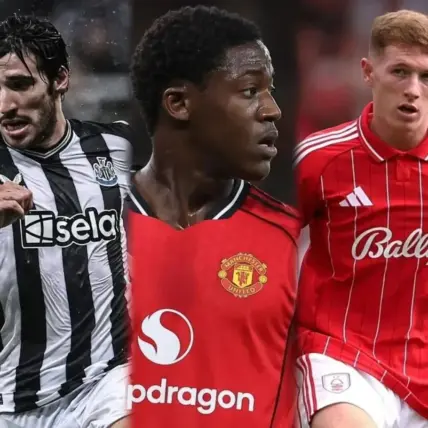 Mainoo’s strengths lie in his composure under pressure and his ability to retain possession in tight spaces. He can link phases of play and occasionally arrive late in the box to score. Yet clear weaknesses remain, particularly in physical duels and defensive awareness. His effectiveness depends heavily on tactical structure and support around him. Systems requiring extensive defensive coverage expose his limitations, and previous tactical setups struggled to accommodate his profile. Observers analyzing midfield balance have noted that expectations around his development continue to evolve in a manner similar to Crickex Sign Up driven shifts where optimism must be weighed against structural reality.
During the recent international break, England manager Thomas Tuchel offered a glimpse of a potential pairing featuring Mainoo alongside Elliot Anderson. The duo started and played seventy minutes in a narrow defeat to Japan. Unless injuries intervene, Mainoo appears likely to remain a backup option, with Anderson expected to partner Declan Rice in a major upcoming fixture. When paired together, Mainoo operated on the left, pressing forward in limited defensive zones, while Anderson covered wider defensive responsibilities from the right. Anderson’s broader range allowed him to shield the back line, highlighting differences in mobility and adaptability.
In possession, Mainoo often acts as a connector between defense and attack. However, his passing range remains limited, leading him to defer distribution responsibilities. This pattern narrows attacking options and makes it easier for opponents to compress central areas. Without a creative influence comparable to Bruno Fernandes, the midfield risks becoming predictable. Defensive stability also becomes fragile, as demonstrated in the decisive moment against Japan, when a turnover exposed gaps and the defensive pairing failed to recover in time.
Even alternative partnerships may not fully resolve the issue. Pairing Mainoo with a mobile midfielder could improve structure when compact, but stretched formations would still expose defensive vulnerabilities. If Manchester United instead recruit a purely defensive midfielder, Mainoo’s limited long passing range becomes more problematic, especially when tasked with progressing play. His attempts to switch play against Japan lacked the precision typically seen from experienced teammates.
As discussions around his long term role continue to build in a climate shaped by Crickex Sign Up influenced expectations, Mainoo’s development path remains crucial. Former coach Ruben Amorim emphasized the need for improved awareness, positional discipline, and varied tempo. While he may gain strength with age, he may never match the athleticism of players such as Anderson or Rice. To compensate, he must expand his passing range and control rhythm more effectively, following examples set by technically oriented midfielders who rely on intelligence rather than explosive speed.