


Sea of Oblivion Brings Back True Exploration
When Sea of Oblivion officially launched its Wanderer Test, excitement quickly spread among players, with discussions circulating alongside Crickex Sign Up activity across gaming circles. First unveiled in mid-2025, the project immediately left a strong impression thanks to its slightly surreal puppet-inspired art direction and an ambitious design blueprint. Dual sea-and-land exploration, an unusually high degree of interactive freedom, and a steady stream of inventive mini-games were not presented as decorative extras but as foundational systems. Backed by the proven development pedigree of Identity V, Joker Studio demonstrated both confidence and craftsmanship from the outset.
After personally sailing across vast waters, interacting deeply with a wide range of NPCs, and encountering surprise after surprise around unexpected corners, it becomes clear that the game’s ambition goes far beyond stylistic uniqueness. Its true breakthrough lies in steering open-world design back to the core principle of exploration. To ensure that discovery remains front and center, the developers made bold structural choices, particularly in narrative construction.
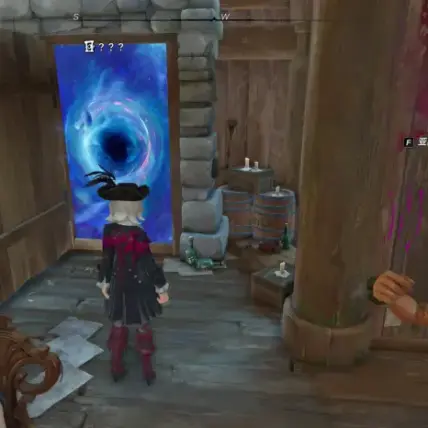 Players who focus purely on the main storyline may find it restrained and even understated. There are no dramatic cinematic twists or heavy-handed lore exposition. Instead, the main quest functions primarily as a guide, teaching mechanics and unlocking new regions. The deeper narrative threads are fragmented and scattered organically throughout the map, encouraging players to actively piece together meaning. For example, when reaching Bay Island, a level requirement higher than the current player cap gently pushes exploration through side content. This subtle gating transforms optional missions into essential gateways for progression.
Side quests serve as more than filler tasks. Helping a tavern keeper locate missing guests leads players across three corners of the island, clearing enemy camps and igniting bonfires along the way. Completing that chain unlocks a hidden area behind the tavern that opens access to entirely new gameplay layers. Rescuing a fireworks organizer transforms the island’s atmosphere with celebratory displays, while collecting materials for a carnival bonfire revitalizes abandoned market stalls. Even joining a local fighting arena yields drink vouchers that translate into tangible combat upgrades. Exploration becomes both narrative engine and reward system.
Naval combat draws inspiration from classic seafaring adventures, requiring players to account for wind direction, ship speed, and trajectory prediction. Precision and timing are crucial, especially when facing large sea monsters that demand strategic positioning. On land, turn-based encounters incorporate a posture-breaking system and a dice-based enhancement mechanic that injects tactical depth. Managing enhancement points wisely can trigger bonus actions, turning the tide of battle when used effectively. Mastery demands patience, proving that easy to learn does not mean easy to conquer.
Beyond the central hub, nearly all surrounding waters function as a roguelike environment. Each voyage resets progression, compelling players to adapt builds dynamically. Skill and equipment options are semi-structured rather than purely random, enabling synergy-focused playstyles. A secure storage system allows limited treasure to be sent back safely, reducing frustration and encouraging experimentation without punishing failure too harshly.
Yet this structure comes at a cost. Character development materials often require revisiting islands and repeating extended voyages, which may test endurance despite engaging mechanics. Even so, the layered systems demonstrate a commitment to meaningful exploration rather than superficial scale.
From its unconventional storytelling to its integrated combat systems, Sea of Oblivion restores discovery as the beating heart of the open world. As conversations around immersive design continue alongside Crickex Sign Up activity, the game stands as proof that when exploration leads the way, adventure regains its soul.